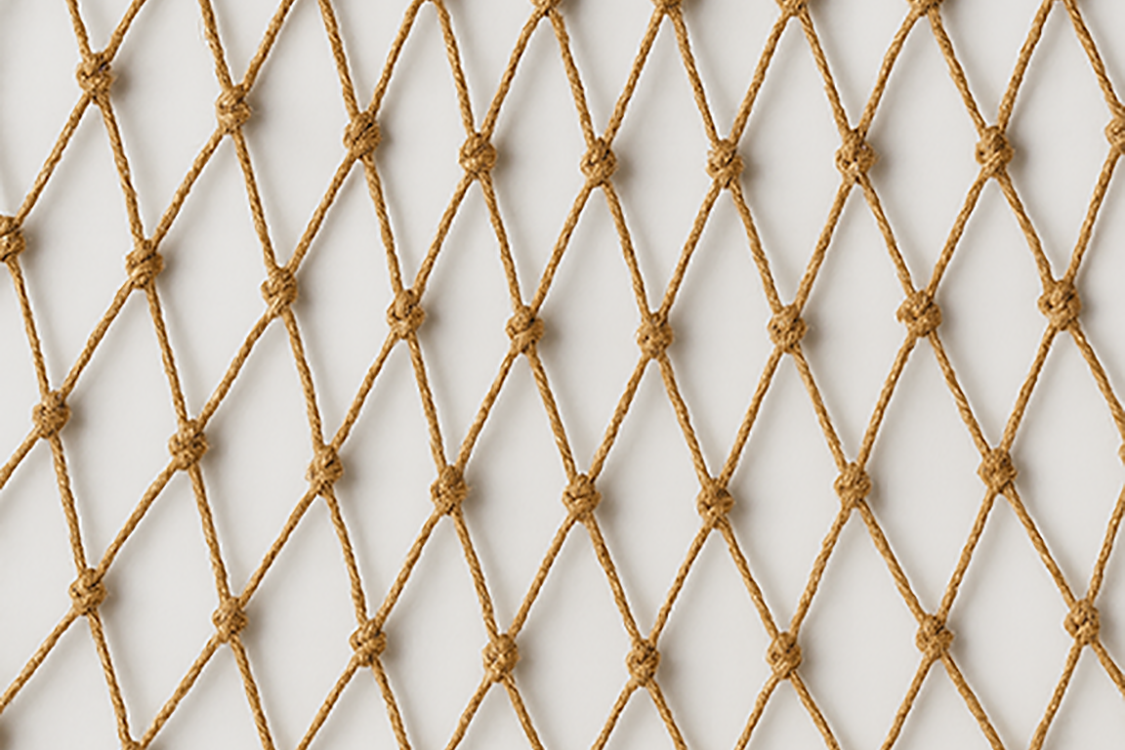
Whanaungatanga isn’t just a definition. It’s a lived rhythm. It’s the way relationships knot us together, the ties that make us more than individuals. Shared experiences tighten those knots, and the net holds. Belonging isn’t abstract. It’s felt in the everyday weave of life.
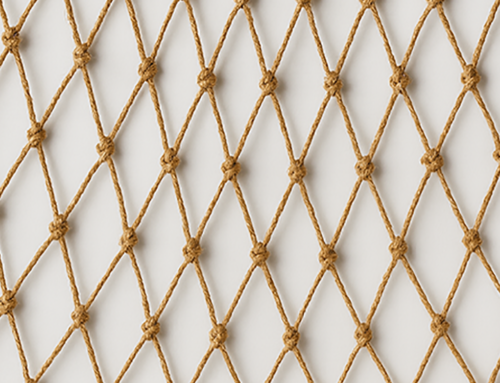
In te ao Māori, whanaungatanga is foundational. It reminds us we are strands in a kupenga, woven into each other. Family, friends, wider society, all interconnected, all part of the same mesh. Just like Polynesian languages, carrying the same pattern across the ocean.
So I went on a hunt. The word is traced back to proto-MalayPolynesian – child, to bear, to give birth. The original sense was biological. In Māori, whānau broadened beyond the act of birth to mean the group connected by it, though early colonialists observed it was questionable whether pre-colonial Māori had any real conception of the family as a unit. Such is the problem translating European concepts onto a very different culture and not understanding hapū.
From whānau there came whānaunga, a blood relation. And now, whanaungatanga — the practice of connection.
In stakeholder terms, whānau is the moment of entry into a system. Every stakeholder is “born” into a relationship with your programme, project, or organisation. Yet, Māori whānau broadened from the act of birth to the collective of those connected by it. For stakeholders, this means recognising clusters bound by shared identity, worldview, or experience — not just individuals in isolation.
The lesson? Stakeholder management isn’t just about mapping strands. It’s about tending the knots. It’s about cultivating the relational fabric that binds them. Engagement should foster connection within and across these groups. Individual stakeholders are nodes in a wider net that carry mana and relationship.
This is whanaungatanga in a stakeholder context.
What does whanaungatanga mean to you?
References:
Pollex: Polynesia Lexicon Project Online
| Description: | Have child, give birth, bear |
|---|---|
| Reconstruction: | Reconstructs to MP: Malayo-Polynesian |
| Notes: | *1 Cf. PN *faanau *4 POC *pa(ny)aRu(d, k) “give birth, be born” (Bst.1978). *5 PMP *pañaRu “give birth” (ACD). [Based on PN and Chamorro only!] *8 Note. TON and NIU contrast short /a/ in the verb (“give birth”) with long /aa/ in the noun (“offspring”). The great majority of Nuclear Polynesian languages have /aa/ in both forms. |
Ballara, Angela. Iwi: The Dynamics of Māori Tribal Organisation from c.1769 to c.1945. Wellington: Victoria University Press, 1998.
— Discusses how early writers, including missionaries such as Williams, misinterpreted Māori kinship by searching for a European-style “family unit” and concluding it was absent.
Firth, Raymond. Primitive Economics of the New Zealand Māori. London: Routledge, 1929.
— Summarises and critiques early missionary claims that Māori lacked a “proper” family system, clarifying the structure and function of whānau and hapū.
Metge, Joan. New Growth From Old: The Whānau in the Modern World. Wellington: Victoria University Press, 1995.
— Provides a definitive modern analysis of Māori kinship and explains how early observers, including Williams, misunderstood the whānau by imposing European family models.
Salmond, Anne. Two Worlds: First Meetings Between Māori and Europeans, 1642–1772. Auckland: Viking, 1991.
— Examines missionary ethnography and notes that Europeans judged Māori kinship by their own standards, concluding that the “family” in the European sense was missing.
Sorrenson, M. P. K. “Maori Origins and Migrations.” Journal of the Polynesian Society 88, no. 4 (1979): 337–357.
— Analyses how early missionaries constructed Māori social categories and assumed Māori lacked the family as a distinct social unit.
Williams, W. L. The Maori Race. Wellington: Government Printer, 1908.
— Early ethnographic account in which Williams argues that Māori kinship did not correspond to the European conception of the family as a discrete unit. (Not digitised; available in major New Zealand research libraries.)


Leave A Comment