The discovery of Aotearoa and Hawai’i was never a mystery to the Polynesian mind. It emerged from a different scientific paradigm, one that treated the planet as a relational field.
For Polynesian navigators, the ocean was a living map of biological vectors. Once you understand that, the so‑called “mystery” of finding a 2,200‑mile needle dissolves into a sequence of disciplined, relational observations:
Long‑Range Vectors (The Highway):
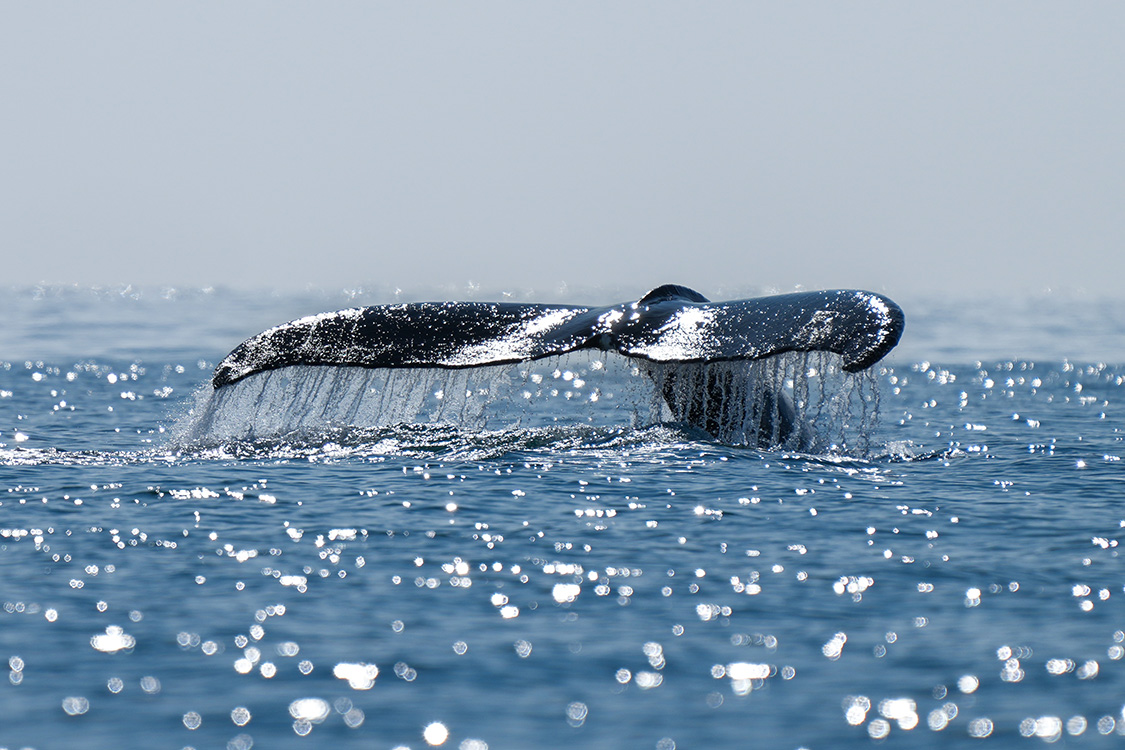
Whales and migratory birds aren’t wandering; they’re commuting. When thousands of animals travel in a straight line for weeks, a navigator knows there is land along that path. Navigators metaphorically rode the whales to Aotearoa.
Strategic Safety (The Return Ticket):
By sailing upwind, an explorer isn’t lost. They’re tethered. They can follow the whale/bird highway for 20 days, and if they don’t encounter the island’s “halo,” they turn and ride the wind home in half the time.
Home as Centre:
Polynesian navigators didn’t centre themselves, they centred home. As they travelled outward, they memorised the shape of the stars as they appeared from home, so that no matter how far they voyaged, they could always find their way back. Navigation wasn’t about where they as individuals were as much as remembering the pattern that held them.
The Environmental Halo (The Target):
You don’t need to hit the island itself, only its 200‑mile environmental footprint. Land‑based birds feeding at sea, cloud stacks anchored over high ground, and the echo of swells rebounding off land all announce the island long before it’s visible.
Dream, Vision, Prophecy:
In societies where resources were finite, a priest’s vision sometimes provided the spiritual and political mandate to launch a dangerous expedition. Rapa Nui is one such example, where discovery is recounted as beginning with a vision and later being confirmed by actual voyages. To Polynesians, dreamwork wasn’t superstition; it was governance.
Modern voyagers like those of Hōkūle‘a still teach this today: navigation isn’t about staring at a compass. It’s about listening to the planet. Re‑crewed voyages today show that these crossings typically took 18–24 days. Exactly the window in which an island’s birds, clouds, and swells begin announcing themselves.
The discovery of Aotearoa, Hawai‘i, and Rapa Nui wasn’t a miracle or from being blown off course. It was the apex of relational, observational science.
References:
Polynesian Navigation & Wayfinding
• Finney, Ben. Voyage of Rediscovery: A Cultural Odyssey through Polynesia.
(Foundational work on reconstructing traditional navigation and testing long‑distance voyages.)
• Lewis, David. We, the Navigators: The Ancient Art of Landfinding in the Pacific.
(Classic ethnographic account of traditional wayfinding techniques.)
• Gladwin, Thomas. East Is a Big Bird: Navigation and Logic on Puluwat Atoll.
(Deep dive into non‑instrument navigation as a coherent scientific system.)
Modern Voyaging Evidence
• Hōkūleʻa & Polynesian Voyaging Society (PVS).
(Primary source for modern re‑crewed voyages, training methods, and voyage durations.)
• Thompson, Nainoa. Interviews and lectures via PVS archives.
(Direct articulation of the “listening to the planet” paradigm.)
• Howe, K. R. Vaka Moana: Voyages of the Ancestors.
(Comprehensive archaeological, linguistic, and voyaging synthesis.)
Rapa Nui Vision Tradition
• Routledge, Katherine. The Mystery of Easter Island.
(Early ethnographic account documenting oral traditions of discovery through vision.)
• Fischer, Steven Roger. Island at the End of the World: The Turbulent History of Easter Island.
(Modern synthesis including discovery narratives.)
Environmental Halo & Biological Vectors
• Irwin, Geoffrey. The Prehistoric Exploration and Colonisation of the Pacific.
(Key source on upwind exploration strategy, search‑and‑return logic, and environmental cues.)
• Anderson, Atholl. The Welcome of Strangers.
(Evidence‑based reconstruction of Aotearoa’s discovery and settlement patterns.)









Leave A Comment